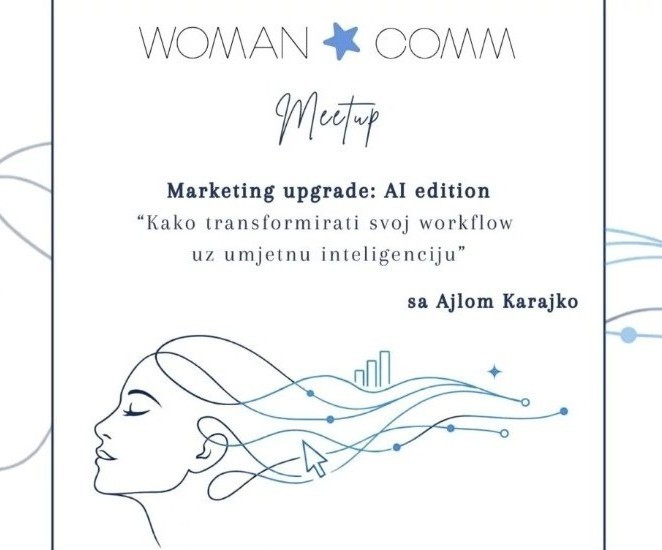



Last week I spoke at a closed event and, honestly? It was one of those moments that reminds you why you do what you do in the first place.
After the talk, many women came up to me to say that something had finally “clicked” for them.
Not because they saw a particularly complex tool.
Not because I showed a spectacular workflow.
But because I said two very simple things.
First: we are currently raising a new “AI baby,” and if women aren’t in the room where it is being shaped, it will grow up without us.
Second: you don’t have to be perfect at this. You can play with AI. Experiment.
You can open a tool, try something, and close the tab if you don’t like it.
That permission to play completely changed the energy in the room.
And maybe that’s exactly why it was the perfect conversation for the International Women’s Day weekend. Because the values that get built into artificial intelligence today reflect the people who are in the room when those decisions are made.
For the last 10 years, I’ve watched technological decisions being made in rooms without enough women — decisions that don’t take us into account at all. And no one is happier than me that this is finally changing. Conversations like the one we had are part of that shift. And I hope we don’t stop.
However, I want to be honest about one more thing happening these days, where the ones most affected are usually women.
Claude, who happens to be my favorite LLM, is currently going through an explosive moment of popularity. And the internet, as always, quickly handed the microphone to everyone who discovered it three weeks ago and is now running workshops on agents, leading strategy sessions, and selling masterclasses.
I don’t think these people (mostly men, of course) are necessarily trying to deceive anyone. I think they genuinely believe what they’ve built is sophisticated. But that’s exactly where the danger lies.
The riskiest moment with AI is not when you know nothing — it’s when you know just enough to sound convincing, but not enough to realize what you’re missing.
You deserve educators who have built real systems, for real clients, with real consequences, and who can tell you not only what worked, but also what broke.
That is the standard I strive to maintain in my work.
And that’s the standard I would recommend you look for in others, if you’re seeking guidance. Don’t forget — everything is already available online, completely free, if you know where and how to look.
Until the next newsletter, with a promise to be more present in your inbox… on a variety of topics.